
CPAP vs. Alternatives
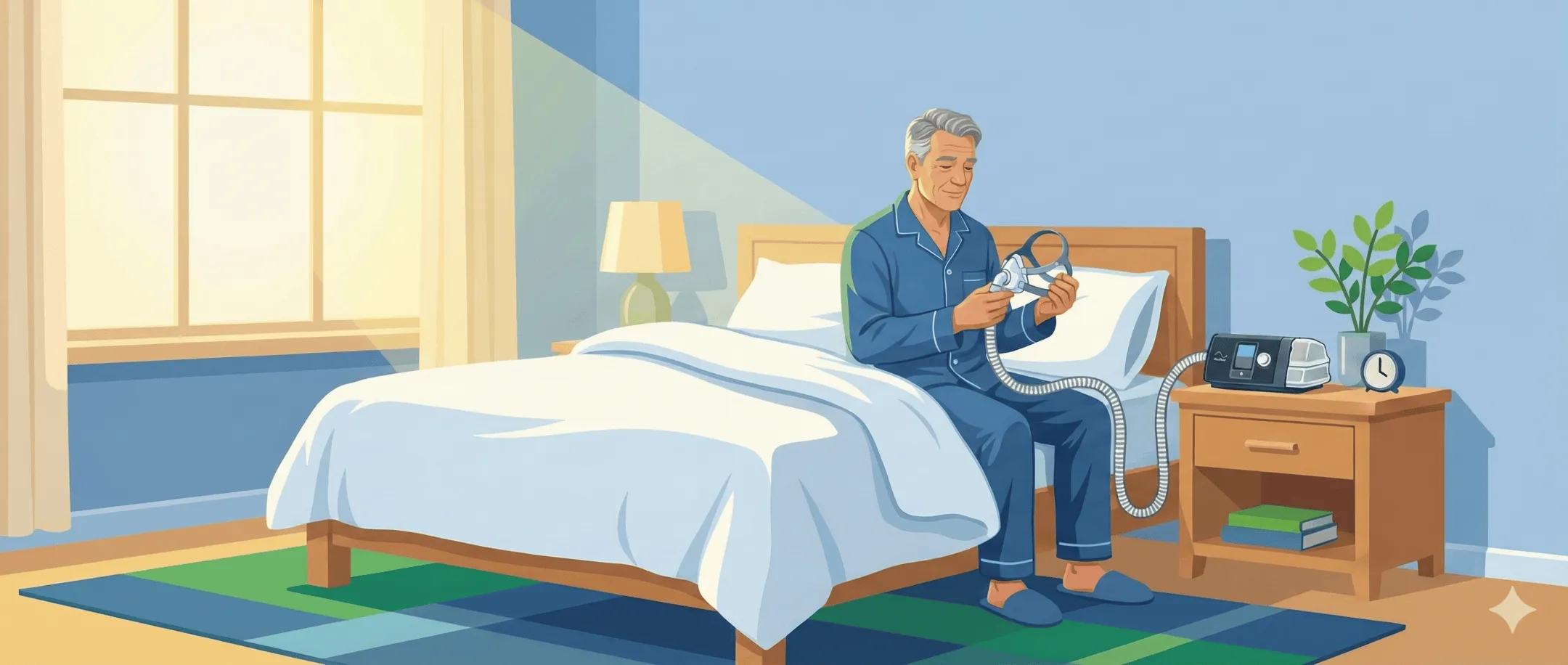
CPAP therapy is considered the gold standard treatment for sleep apnea. While some people find it challenging at first, many of the issues they experience can be addressed with the right equipment, settings, and support.
There are also well-researched alternatives to CPAP therapy that may be appropriate in certain cases, but as you explore these options, you may ultimately find that CPAP proves to be the most effective treatment for your needs.
Below, we’ll explain how CPAP alternatives work, who may benefit from them, and how they compare to CPAP therapy.
How CPAP Therapy Works
Sleep apnea is characterized by shallow or paused breathing while sleeping when the airway collapses. For people with obstructive sleep apnea, CPAP therapy uses pressurized air to keep breathing passages open. A device pressurizes the air and sends it through tubing that connects to a mask sealed over your nose, mouth, or both.
People with central sleep apnea (CSA) and complex sleep apnea (mixed sleep apnea) can also find symptom relief from CPAP therapy, but treatment for these types of sleep apnea isn’t always straightforward and may require other options.
CPAP vs. Oral Appliances
There are two main types of oral appliances used as treatments for adults with OSA: mandibular advancement devices (MADs) and tongue-retaining devices (TRDs). MADs fit over your teeth and move your jaw forward, which increases space in the airway and reduces the likelihood of collapse. TRDs use suction to hold the tongue forward, preventing it from falling backward and blocking from your airway.
Oral appliances fit similarly to mouth guards and some people find them more comfortable than CPAP masks. They’re small, easy to transport, and don’t require electricity, which is convenient for those who travel frequently. They’ve also been shown to lower apnea-hypopnea index (AHI) scores, a key indicator of sleep apnea severity, though they’re not as effective as CPAP therapy for lowering AHI.
Oral appliances haven’t been studied as widely as CPAP, but some researchers think they offer the most potential benefit for people with mild to moderate OSA, those under 60, people with body mass index (BMI) scores under 30, and back sleepers. The American Academy of Sleep Medicine (AASM) and American Academy of Dental Sleep Medicine (AADSM) recommend oral appliances for people who don’t tolerate CPAP therapy.
However, they’re not the best choice for people with CSA, those who need fast treatment, people with low oxygen, and users with specific dental restrictions.
CPAP vs. Weight Loss
Weight plays a major role in OSA. With every 10% increase in body weight, you’re six times more likely to develop OSA. On the other hand, every 10% decrease in body weight can lead to 26% fewer breathing pauses.
For some people, losing weight relieves OSA-related symptoms, and it can even fix long-term breathing issues. When there’s excess weight around the neck, it presses on the airway, preventing proper airflow.
Zepbound is a GLP-1 agonist that’s been FDA-approved to treat OSA. It improves OSA symptoms by treating obesity as an underlying condition. Tirzepatide, the active ingredient in Zepbound, slows stomach emptying and decreases appetite, both of which can lead to weight loss.
To be eligible for Zepbound for sleep apnea, you must have an OSA diagnosis, a BMI of 27 or higher, and a prescription from a physician. Those using Zepbound should diet and exercise while taking the drug.
It’s important to note, though, that people who treat OSA with Zepbound often continue CPAP therapy, as it can take months for weight loss to begin on Zepbound.
CPAP vs. Surgery for Sleep Apnea
Surgery for sleep apnea generally involves removing or altering obstructions to the breathing passages, which clears the way for air to move freely. Surgery is most often considered for people who have anatomical problems contributing to their OSA and those who can’t adhere to CPAP therapy. Overall, sleep apnea surgeries have been shown to improve OSA, but they’re not the right choice for most people.
There are multiple kinds of surgeries intended to treat OSA. The most common is uvulopalatopharyngoplasty (UPP), which removes excess tissue in the middle part of the throat and strengthens the remaining tissue to prevent airway collapse.
Other types of sleep apnea surgery include nasal procedures that improve airflow, surgeries to reduce tongue size or movement, craniofacial surgery that moves the jaw forward, and tonsillectomies, which are generally reserved for children.
Surgical intervention is often a last resort option for physicians and providers, who would prefer that patients first try one of the non-invasive OSA treatment methods. Surgery can be non-reversible and it comes with risks: Once tissue gets removed from your airway, it’s gone. For the right candidates, surgeries can have positive short- and long-term quality of life outcomes that are similar to CPAP results.
CPAP vs. Inspire Therapy
Inspire therapy is a surgical implant that works to treat OSA and its symptoms by moving your tongue away from your breathing passage. There are three main components: a breathing monitor, a nerve stimulator, and a remote.
During a 90-minute outpatient procedure performed under general anesthesia, the monitor is placed in your chest near your ribs. There’s a wire connected to the monitor that stretches to your jaw. The wire stimulates the nerve that controls your tongue, moving it away from your throat so that air flows freely through your breathing passages without obstruction. The remote turns the monitor on and off at bed time.
Inspire is FDA-approved and has been proven as a successful treatment for OSA, but it’s not the right choice for everyone. To get Inspire, you have to have a proven record of trying and failing to adhere to CPAP therapy first. You must have a BMI under 40 and no anatomy- or apnea-related restrictions.
Inspire works quite differently than CPAP. It’s more similar to an oral appliance because it physically moves your tongue out of the way to clear a pathway for air. CPAP doesn’t change your tongue’s position, it pushes air into the breathing passage to keep your soft palate supported. Inspire isn’t as invasive as upper airway surgery, but it’s still a medical procedure. Inspire is only meant for people who can’t tolerate CPAP therapy.
How to Decide Which Treatment Is Best for You
Getting a sleep study is the first step in treating sleep apnea of any kind. Both in-lab polysomnography and at-home sleep tests can give you accurate data that measures how often you stop breathing. They provide enough information for a physician to determine whether or not you have sleep apnea. Sleep study results also detail your sleep apnea severity and can give doctors enough information to begin a treatment plan.
Sleep apnea treatments vary person to person depending on anatomy, OSA severity, personal preference, and medical history. Your doctor will take all these factors into account when deciding whether to treat your sleep apnea with CPAP therapy or an alternative. They’ll also consider your medical history and any potential risks that could factor into your treatment.
When to Talk to Your Doctor
If you wake up regularly with the same symptoms you had before beginning CPAP therapy, you may want to speak to your doctor about fine-tuning your pressure settings or equipment. Some people can’t tolerate wearing a CPAP mask and need alternative options. If you wake up without your mask on or can’t sleep because of discomfort, speaking with your physician about alternatives could help.
Don’t stop CPAP therapy without guidance from your doctor. Quitting therapy, even for a short time, can impact your health and cause OSA relapse.
When considering CPAP alternatives, your doctor will likely look at your airway and sleep apnea severity. A physician’s exam can help them understand why CPAP is difficult and what the best options are for your specific anatomy. Your AHI also impacts what kind of treatment is best. Some CPAP alternatives are best for mild to moderate OSA, while others are better suited to moderate to severe OSA.
References
- https://pubmed.ncbi.nlm.nih.gov/28287009/
- https://www.ncbi.nlm.nih.gov/books/NBK195810/
- https://www.thoracic.org/patients/patient-resources/resources/obstructive-sleep-apnea-in-adults.pdf
- https://www.ncbi.nlm.nih.gov/books/NBK459252/
- https://pmc.ncbi.nlm.nih.gov/articles/PMC6883649/
- https://pmc.ncbi.nlm.nih.gov/articles/PMC3945285/
- https://pmc.ncbi.nlm.nih.gov/articles/PMC6589990/
- https://www.uptodate.com/contents/oral-appliances-in-the-treatment-of-obstructive-sleep-apnea-in-adults
- https://aasm.org/resources/clinicalguidelines/oral_appliance-osa.pdf
- https://www.sciencedirect.com/science/article/pii/S108707922400100X
- https://pmc.ncbi.nlm.nih.gov/articles/PMC11972082/
- https://www.fda.gov/news-events/press-announcements/fda-approves-first-medication-obstructive-sleep-apnea
- https://www.ncbi.nlm.nih.gov/books/NBK585056/
- https://pmc.ncbi.nlm.nih.gov/articles/PMC3480570/
- https://pubmed.ncbi.nlm.nih.gov/16735919/
- https://www.fda.gov/medical-devices/recently-approved-devices/inspire-upper-airway-stimulation-p130008s090
- https://pubmed.ncbi.nlm.nih.gov/40167853/